ห้องปฏิบัติการทางโลหะวิทยา เพรียบพร้อมด้วยเครื่องมือวิเคราะห์อันทันสมัยภายใต้การควบคุมโดยผู้ชำนาญการทางด้านโลหะวิทยา ทำให้สามารถวิเคราะห์และทดสอบผลได้อย่างถูกต้องแม่นยำ ด้วยเครื่องมือประสิทธิภาพสูงและเทคนิคที่มีความเฉพาะเจาะจง อาทิ การวิเคราะห์โครงสร้างจุลภาค, การวิเคราะห์ธาตุและองค์ประกอบของธาตุในโลหะและโลหะผสม, การวิเคราะห์พื้นผิวและความเสียหายของพื้นผิว, การวิเคราะห์แบบแผนที่ธาตุและหาองค์ประกอบทางเคมีเชิงความหนา/ความลึก เพื่อแก้ไขปัญหาให้กับลูกค้าได้อย่างรวดเร็วและตรงประเด็น
เราพร้อมให้บริการวิเคราะห์และแก้ไขปัญหาทางด้านโลหะวิทยาอย่างรวดเร็วและตรงจุด เพื่อช่วยให้ลูกค้าสามารถนำข้อมูลไปใช้ปรับปรุงคุณภาพผลิตภัณฑ์และกระบวนการผลิตได้อย่างมีประสิทธิภาพ
คุณสมบัติเด่น
- การวิเคราะห์โครงสร้างจุลภาค
- การวิเคราะห์ธาตุและองค์ประกอบของโลหะและโลหะผสม
- การวิเคราะห์พื้นผิวและความเสียหายของพื้นผิว
- การวิเคราะห์ดูการกระจายตัวของธาตุและการหาองค์ประกอบทางเคมีเชิงความหนา/ความลึก
การใช้งาน
- บริการวิเคราะห์ชิ้นงานประเภท: ของแข็ง ผง และสารเคมี
- บริการวิเคราะห์วัสดุ: การวิเคราะห์วัสดุทั้งที่เป็นตัวนำไฟฟ้าและไม่เป็นตัวนำไฟฟ้า (เช่น โลหะ, โลหะผสม, เซรามิก, พลาสติก)
ประเภท
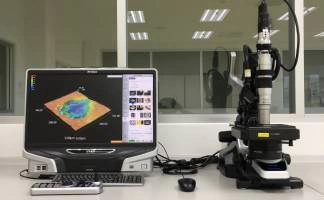 กล้องจุลทรรศน์ดิจิทัลแบบใช้แสง: OMรายละเอียด กล้องจุลทรรศน์ดิจิทัลสามารถใช้งานสำหรับงานตรวจสอบวิเคราะห์ โลหะขัดเงา, งานตัดขวาง และถ่ายภาพกำลังขยายต่ำ ตัวอ
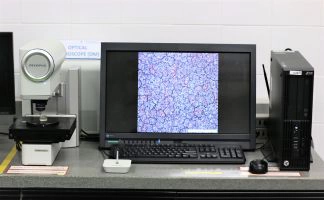 กล้องจุลทรรศน์แบบใช้แสง: OMรายละเอียด กล้องจุลทรรศน์สามารถใช้งานสำหรับงานตรวจสอบวิเคราะห์ โลหะขัดเงา, งานตัดขวาง และถ่ายภาพกำลังขยายต่ำ ตัวอย่างบริ
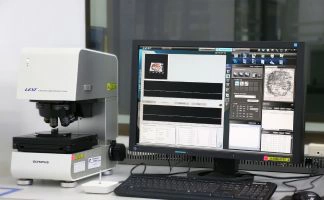 กล้องจุลทรรศน์แบบใช้แสงเลเซอร์สำหรับถ่ายภาพ 3 มิติรายละเอียด กล้องจุลทรรศน์แบบใช้แสงเลเซฮร์ที่ประกอบด้วยระบบเลนส์สองระบบด้วยกัน ได้แก่ ระบบเลนส์สำหรับดูภาพสีและระบบเลนส์ข
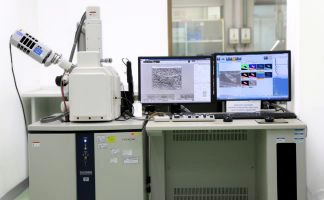 กล้องจุลทรรศน์อิเล็กตรอนแบบส่องกราด (SEM)รายละเอียด กล้องจุลทรรศน์อิเล็กตรอนสแกน (SEM) เป็นเครื่องมือที่ทันสมัยในการตรวจสอบและวิเคราะห์พื้นผิวของวัสดุในระดับไมโค
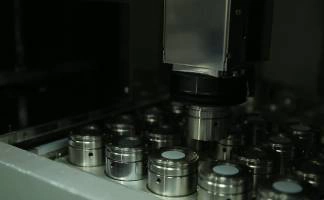 เครื่องเอ็กซ์เรย์ฟลูออเรสเซนท์สเปคโตรมิเตอร์ (XRF)รายละเอียด XRF (X-ray Fluorescence) หรือ การวิเคราะห์ด้วยรังสีเอกซ์ฟลูออเรสเซนต์ เป็นเทคนิคที่ใช้ในการวิเคราะห์หาชนิดและ
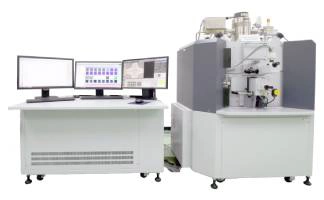 Electron Probe Micro Analyzer (EPMA)รายละเอียด เครื่องวิเคราะห์ The Electron Probe Micro Analyzer (EPMA) เป็นอุปกรณ์ที่ใช้สำหรับการวิเคราะห์สารในรูปของแข็ง
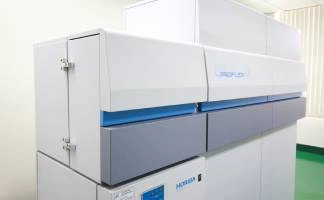 Glow Discharge Optical Emission Spectroscopy: GD-OESรายละเอียด Glow Discharge Optical Emission Spectroscopy (GD-OES) เป็นเทคนิคการวิเคราะห์องค์ประกอบทางเคมีของธาตุในวัสดุ โ
คำถามที่พบบ่อย
What is carbonitriding heat treatment?
Carbonitriding is one of the heat-treating processes under various gas atmospheres and temperatures mainly to improve hardness, wear-resistance, and fatigue or tensile strength properties of industrial parts in order to prolong their lifespan and improve their properties to suit specific usability.
Carbonitriding is a process in which carbon and nitrogen are simultaneously infiltrated into the surface of steel at a temperature of about 800°C to 880°C, lower than ordinary gas carburizing, and then quenched and hardened. In gas carbonitriding, NH3 gas is added to a normal gas carburizing atmosphere, and nitriding and carburizing are performed simultaneously by
the N component decomposed from NH3. Since the hardenability is improved by nitriding, it is possible to treat non-alloy steel such as SPCC and low carbon steel which cannot be applied by gas carburizing, and the reduction of material cost is also a great advantage. Since it can be quenched at a lower temperature than gas carburizing, deformation, and distortion due to heat treatment can be reduced. Characteristics of gas carbonitriding are including
- Applicable steel type: Low carbon steel (low carbon steel such as SP material, SS material, S10C), case hardening steel (low carbon alloy steel such as SCM / SCr / SNCM)
- Quenching is possible at low temperatures, reducing quench deformation (Excluding case-hardened steel)
- Since the hardenability is improved by the influence of nitrogen, quenching becomes easy even with carbon steel, which is advantageous in terms of quenching cracking.
- Compared to gas carburization, the abnormal hardening layer on the outermost surface is suppressed, and a uniform hardened layer can be generated.
- Improved temper softening resistance compared to gas carburizing.
Why is carbonitriding heat treatment important?
This process is important because it can improve the mechanical properties of the metal, such as its hardness and toughness. In addition, carbonitriding can also help to protect the metal from corrosion.
Which materials can do the carbonitriding heat treatment?
The carbonitriding process usually applies with power units parts such as engines, transmissions, and differentials parts (connecting rod, crankshaft, transmission gear/shafts, CVT pulley shaft, driveshaft, constant velocity joint parts, final gear, differential side gear, etc.)
ห้องปฏิบัติการทางโลหะวิทยาของเราเพียบพร้อมด้วยเครื่องมือวิเคราะห์อันทันสมัย ภายใต้การควบคุมโดยผู้ชำนาญการทางด้านโลหะวิทยา ทำให้สามารถวิเคราะห์และทดสอบผลได้อย่างถูกต้องแม่นยำ ด้วยเครื่องมือประสิทธิภาพสูงและเทคนิคที่มีความเฉพาะเจาะจง